
Follow My Instagram
Sunday, 24 February 2013
Monday, 11 February 2013
Sunday, 12 July 2009
You Are What You Eat
For many, springtime means revamping exercise regimens, improving appearance, reading more books, taking on a new hobby, and improving dietary habits.
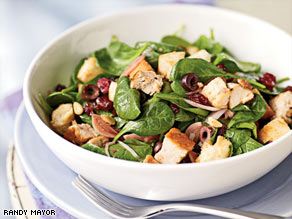
Vegetables, like spinach are key to keeping your heart in prime condition and building better bones.
Great news is that following good-for-you food goals will help your whole body -- from your skin to your brain -- so you can tackle those other resolutions with ease.
"The best way to have healthy hair, eyes, and skin is to take good overall care of yourself. That means eating well," said Dr. David L. Katz, director of the Yale Prevention Research Center at Yale University. So whether it's your heart, brain, bones, eyes, skin, or hair you seek to nurture, there are foods up to the task.
"The more colors you get into your diet, the better," Katz said. A variety of fruits and vegetables supplies antioxidants and vitamins that are most powerful when working together. Daily servings of whole grains, lean protein, and dairy round out your body's needs. A diet rich in fresh, whole foods, full of colors and rich textures, satisfies with abundant flavor, and nourishes every part of your body.
For Silky Skin and Hair
Antioxidants like lycopene and vitamin C, as well as soy protein and omega-3 fatty acids, help keep skin glowing. Antioxidants have long been the rage in topical skin care, but those same nutrients work even better from the inside out. When skin (the body's largest organ) is exposed to the sun's rays, free radicals can develop, Katz explained. "These free radicals attack the skin and impair blood flow to the area, causing premature aging. Antioxidants fight that process."
Vitamin C, found in citrus fruits, facilitates collagen production, a critical component for vibrant skin. Another antioxidant, lycopene, found in foods like canned tomatoes and red grapefruit juice, also promotes skin health. Tofu is a good option since its omega-3 fatty acids help regenerate new skin cells and reduce inflammation, while its soy protein has been shown to boost collagen.
Shiny, healthy hair starts with the vitality of cells in the hair follicle, where hair is manufactured, says Katz. Eat foods high in calcium and quality protein like eggs, dairy, or fish. Eggs also provide biotin, a structural component of both bone and hair. Vitamins B6, B12, and folate nourish follicle cells, too.
Eat For Your Eyes
According to a study published in the Archives of Ophthalmology, people who ate two servings of fish weekly benefited from an almost 50 percent decrease in the risk of age-related macular degeneration (AMD), said Dr. Emily Chew, deputy director of the division of epidemiology and clinical research at the National Eye Institute. Eggs, leafy greens, broccoli, winter squash, and Brussels sprouts all contain the antioxidants lutein and zeaxanthin (both associated with eye health), as well as vitamins C and E, zinc, and beta-carotene.
Scientists are still investigating how these foods promote eye health. Observational studies show they likely reduce the risk of AMD, Chew said. No one knows exactly what lutein and zeaxanthin do for the eye, but it's thought they filter damaging light and support cell structure. Expect more answers in 2012, when Chew and colleagues hope to publish research on the effects of lutein, zeaxanthin, and omega-3 fatty acids from a study following 4,000 patients for five years.
Build Better Bones
Calcium, vitamin D, and phosphorus work together to build strong bones. Even though green leafy and cruciferous vegetables (like spinach and broccoli) contain calcium, the body absorbs it best from dairy products, said Joan Lappe, a bone health researcher and professor at Creighton University in Omaha, Nebraska.
Dairy products offer a package deal: they are abundant in phosphorous, and vitamin D added to milk and dairy products aids in calcium absorption. Some nondairy foods high in calcium include canned salmon, sardines, and calcium-fortified firm tofu. Greens are still good bone foods, however. Broccoli, kale, and bok choy may provide little calcium, but they offer plenty of vitamin K. Research is showing promise that vitamin K -- or some antioxidant or phytochemical in foods high in the vitamin -- boosts bone mineralization. Research published last year in Osteoporosis International followed postmenopausal women for three years, and found that those taking supplemental vitamin K maintained or enhanced bone strength, compared to those on a placebo.
Heart Helpers
Whole grains, fatty fish, and fresh fruits and vegetables are the keys to keeping your heart in prime condition.
A recent review of seven studies showed that two and a half servings of whole grains per day reduced heart attack and stroke risk by 21 percent, said lead author Dr. Philip Mellen, then an assistant professor at the Wake Forest School of Medicine in Winston-Salem, North Carolina. Whole grains are rich in antioxidants, especially vitamin E (also found in almonds, peanuts, and green leafy vegetables), which helps maintain healthy blood vessels. And soluble fiber from fruits, vegetables, and nuts helps lower harmful LDL cholesterol and control weight, both of which have a positive impact on heart health.
Further cut your risk of a heart attack by eating fish, especially those high in the omega-3 polyunsaturated fats like salmon, mackerel, or rainbow trout. Omega-3s make platelets in the blood less sticky, reducing clotting and the likelihood of a heart attack. Brain Boosters
Omega-3 fatty acids and whole grains are good for your heart -- and they're good for your brain and mental health, too. "People who are heart healthy are brain healthy," said Dr. Joseph S. Kass, assistant professor of neurology at Baylor College of Medicine in Houston, Texas.
Wednesday, 25 June 2008
Healthy Eating Based on the Food Guide Pyramid
Bread, Cereal, Rice, and Pasta
6-11 servings a day
These complex carbohydrates make up the base of the pyramid. They provide B-vitamins, minerals, and fiber. Try to steer clear of the more highly processed carbohydrates such as white bread and sugary cereals. Choose whole grain products whenever possible. They have more vitamins, minerals, and fiber than products made from processed white flour. They also hit your bloodstream more slowly, giving you a longer lasting source of fuel.
1 serving = 1 slice of bread, 1/2 bagel or bun, 1 ounce dry cereal, 1/2 cup cooked cereal, 1/2 cup cooked rice, 1/2 cup cooked pasta.
Vegetables
3-5 servings a day
Vegetables are a fantastic source of vitamins and fiber. They're also naturally low in fat and calories. Deep-yellow, or orange vegetables, like carrots and squash, are a great source of vitamin A. Veggies from the cabbage and pepper families (broccoli, Brussels sprouts, cabbage, bell peppers) are surprisingly rich in vitamin C.
1 serving = 1 cup raw leafy greens, 1/2 cup any other chopped vegetable, 3/4 cup vegetable juice
Fruits
2-4 servings a day
Fruit makes a great snack or healthy dessert. It's high in carbohydrate energy and potassium, low in sodium, and full of vitamins. Strawberries, watermelon, and citrus fruits (like oranges and grapefruit) are full of vitamin C; apricots and other orange-colored fruits have lots of vitamin A; and cantaloupe, mangos and papayas have both vitamins A and C. Try to avoid juices sweetened with sugar or canned fruit in heavy syrup.
1 serving = 1 medium apple, banana, or orange; 1/2 cup chopped fruit or berries; 3/4 cup fruit juice.
Milk, Yogurt, and Cheese
2-4 servings a day
We've all heard that milk products are rich sources of calcium, but did you know that they're also loaded with protein? A glass of milk or a cup of yogurt has high-quality protein equal to an ounce of meat or cheese or to one egg. Try to choose reduced fat dairy products whenever possible. A glass of whole milk has the equivalent of two teaspoons of butter or three tablespoons of sour cream. That bit of added fat would probably be more enjoyable on a baked potato rather than hidden in your milk!
1 serving = 1 cup milk or yogurt, 1-1/2 ounces of natural cheese, 2 ounces of processed cheese.
Meat, Poultry, Fish, Dry Beans, Eggs, and Nuts
2-3 servings a day
This group is a major source of protein. Cooked beans are high in protein and fiber and low in fat. Tofu and white beans provide calcium. Almonds are good sources of vitamin E. Beef contains highly absorbable trace minerals like iron, zinc, and magnese. Poultry and seafood contribute vitamin B6, and pork is a rich source of thiamine.
1 serving = 2-3 ounces of cooked lean meat, poultry, or fish; 1 egg; 1/2 cup cooked beans, 2 tablespoons peanut butter, nuts, or seeds.
Fats, Oils, and Sweets
Use sparingly
This group represents the tip of the pyramid. It includes butter, oils, margarine, sour cream, soda pop, candy, and sweet desserts. Remember, not all fats are created equal. You want to minimize saturated fats found in animal products like meat and dairy, and trans-fats found in margarine or fried snack foods (look out for "partially hydrogenated" anything). Focus instead heart-healthy unsaturated fats such as those found in olive oil, nuts, seeds, and avocado. Sweets should be minimized as well. It’s generally better to enjoy a really extravagant dessert once in a while than to fill your daily menu with "fat-free" sugary treats. These sweets still tend to be high in calories and pretty much devoid of nutritional benefits. One possible exception may be molasses, which provides a rich source of iron.
Now that we've covered all the basics, let's put it all together in a plan that's right for you. Here are some sample diets at 3 different calorie levels:
1,600 calories is appropriate for many sedentary women and some older adults.
Bread group servings . . . . . . . . . .6
Vegetable group servings . . . . . . .3
Fruit group servings . . . . . . . . . . .2
Milk group servings . . . . . . . . . . .2-3
Meat group (in total ounces) . . . . 5 oz.
Total fat (in grams) . . . . . . . . . . . 53
Total added sugars (in grams). . . .24
2,200 calories is about right for most children, teenage girls, active women and sedentary men. Women who are pregnant or breast feeding may need somewhat more.
Bread group servings . . . . . . . . . .9
Vegetable group servings . . . . . . .4
Fruit group servings . . . . . . . . . . .3
Milk group servings . . . . . . . . . . .2-3
Meat group (in total ounces) . . . . 6 oz.
Total fat (in grams) . . . . . . . . . . . 73
Total added sugars (in grams). . . .48
2,800 calories is good for teenage boys, many active men, and some very active women.
Bread group servings . . . . . . . . . .11
Vegetable group servings . . . . . . .5
Fruit group servings . . . . . . . . . . .4
Milk group servings . . . . . . . . . . .2-3
Meat group (in total ounces) . . . . 7 oz.
Total fat (in grams) . . . . . . . . . . . 93
Total added sugars (in grams). . . .72
Note: Women who are pregnant or breast feeding, teenagers, and young adults to age 24 should have 3 servings from the milk group.
If you are trying to lose weight, increase your activity level and reduce the empty calories in your diet. In particular, look out for lots of highly processed carbohydrates such as commercial snack foods, white bread, regular soda, and large servings of fat-free treats. Remember that fat-free doesn’t mean calorie-free! Try to replace these foods with hearty whole grains, sprouted breads, steel cut oats, and other more nutrient dense sources of carbohydrate.
If you are trying to gain weight, eat more servings from all the food groups and be sure to stay active. You can insure that most of what you gain is lean muscle by sticking to a low-fat, adequate-protein, and higher calorie diet in conjunction with weight training.
For most people it's not necessary to actually measure each serving of food. The serving sizes are given only as a general guideline. For mixed foods you can estimate the food group servings of the main ingredients.
For example, a cheeseburger with lettuce and tomato would be: 2 bread (each half of the bun), 1 meat (the burger itself), 1 dairy (the cheese), and 1 vegetable (the lettuce and tomato.)
Balancing Snacking With Physical Activity For A Healthy Lifestyle
Include a wide variety of healthful snacks in your eating pattern. Snacking on grain-based snacks, for example, can help maintain energy levels while providing vitamins, minerals, protein and carbohydrates. Regular physical activity promotes overall fitness, and a cardiovascular workout helps keep your heart healthy.
Balance Good Nutrition With Good Taste.
Nutrition experts recommend choosing a wide variety of foods from all the food groups in the Food Guide Pyramid. It makes good health sense to moderate total fat intake. Remember cutting down on fat doesn't mean cutting back on taste. Today there are lots of good-tasting, low-fat, nutritious snacks available.
Use the Food Guide Pyramid as your "snack guide." The pyramid provides you with a practical tool to help you include a broad selection of foods.
Here are some suggestions:
Go for the grains.
Nutrition experts recommend 6-11 daily servings of grains, including bread, rice, cereal and pasta. To reach this goal, you can include plenty of grain-based snacks that are low in fat and calories, like graham crackers, pretzels, and fat-free flavored rice cakes.
Be a fan of fruits and vegetables.
The pyramid recommends two or four servings of fruit and three to five servings of vegetables each day. Snack on bananas, peaches, carrots, or green and red pepper strips. Don't forget juices--try a glass of fruit or vegetable juice to help meet serving recommendations.
Don't forget dairy.
Include snacks from the milk, yogurt and cheese group. To help meet your daily calcium requirement, choose two to three servings of dairy products each day. Snack on low-fat yogurt, or have a low-fat or skim milk shake or a slice of cheese on a cracker.
Make Snacking a Part Of Your Active Day.
There are easy ways to make snacking work for you, which is especially important for an active lifestyle. Light snacks help keep you going whether you're at home or work, and especially when you're planning to exercise.
Here are some tips for incorporating snacks into a healthy lifestyle:
Snack for energy.
Include a small snack two to three times a day to help keep up energy levels.
Remember that juice counts.
A glass of fruit or vegetable juice counts as a serving, too. Keep some in the fridge so you can grab one any time.
Snack with a friend.
Take a snack break with a friend. By snacking with someone, you can remind each other to eat healthful snacks and take time out of your busy day to "catch up."
Stash a snack.
Keep snacks in a desk drawer at work or even in a briefcase or carryall, so you're ready when the munchies hit. Be sure to toss a couple of snacks into your duffel bag when you're going to work out.
Pack snacks in the car.
Snacks are fun to share with the carpool gang. Pack the car with some whole-wheat bread sticks, fat-free flavored rice cakes, or fresh apples, bananas, grapes and whole baby carrots.
Have a quick breakfast.
No time for breakfast? Try a new take on the traditional morning meal with a snack-like breakfast, like individual packs of low-fat yogurt, a bagel with preserves, and a glass of fruit juice.
Treat yourself.
Enjoy an evening snack, especially something sweet, after dinner. Savor some fig bars, fat-free caramel corn cakes, or low-fat frozen yogurt.

